Why Do We Celebrate Heritage Day?

In South Africa, Heritage Day is celebrated on 24th September to honour the various cultures and diversities in our country, from the official languages, our cuisine, our music and creative expressions of our historical inheritance. (Department of Arts and Culture).

I love the annual Heritage Day celebrations at schools, with the colourful traditional costumes and dancing. It is a great celebration of our different cultures.  This year there was no dancing or singing at Cosmo City Primary, but many of the children arrived at school on Wednesday proudly wearing their beautiful and varied traditional dress, together with their masks.

Before 1994 some heritages were not freely appreciated or promoted in South Africa. In our democracy it is important for us to recognise the significance of our living heritage and to safeguard it for future generations. Language is an important part of people’s identities and their living heritage, and everyone in South Africa has the right to use any of the 11 official languages of their choice.

In Cosmo City Primary School, where we are conducting our pilot study, children are addressed by their teachers in their home languages, but a lot of formal teaching is conducted in English, and most textbooks are in English.  The graded reading scheme that we will be using for our Book village App has been specially developed for South African children learning English as their first additional language. The books depict the everyday lives of South African children, making them easier for the children to relate to than books set in England or America.  Other South African languages will be added as they become available.

Whilst most of the books in the Book Village library are in English, we have been trying our best to include books in the other SA languages so that the children can enjoy reading in their mother tongue.  We have formed a partnership with the excellent Nal’ibali organisation, and their wonderful stories, available in many South African languages, have been digitised and included in our library for children to borrow.

9 Springtime Stories

Flowers on book

In South Africa, September brings Spring celebrations and perhaps flowers in the classroom for some lucky teachers. At Book Village, we had a look at books in our library inspired by nature, and some of the books that will take you into the exciting, secret and terrifying gardens essential for every childhood.

Fiction Books

1.The Tale of Peter Rabbit, set in the wonderful and frightening vegetable garden of Mr. McGregor is probably one of the first books many children will remember being read to them.  Peter is told by his mother not to go into Mr. McGregor’s garden, but of course he did and – you know the rest!

2. The children in The Secret Garden, by Frances Hodgson Burnett work together to plant their own garden of happiness. The magic of the growth and new life in the secret garden will make every child want to go out and experience the wonder of growing something for themselves.

3.  Alice is desperate to get into the “loveliest garden you ever saw”.  “How she longed to get out of that dark hall, and wander about among those beds of bright flowers and those cool fountains” as she peers out through the tiny door. From Alice’s Adventures in Wonderland by Lewis Carroll.

4.  In The Tree Doctor, Dr Seuss’ Cat in the Hat and Dr Twiggles help Sally and Nick discover why their tree won’t grow.  This is written for children learning to read and is perfect for Spring reading and Arbour Day celebrations.

5.  We love Richard Scarryand Lowly Worm Meets the Early Bird is another book for beginner readers to enjoy.  Early Bird looks and looks for a worm to play with.  He is about to give up searching when he meets Lowly Worm. 

6.  The Garden Thief by Gertrude Chandler Warner is a book in the Boxcar Children Series, perfect for children in grades 2-6 to read by themselves. Something strange is happening in the community garden!  Who is stealing all the veggies?

We have many interesting non-fiction books that we hope might inspire children to think about nature.  Here are three that we think our children will really enjoy.

Non-fiction Books

7.  Counting Birds by Heidi Stemple is the award-winning story behind the first annual bird count in America.  It is a beautifully illustrated book that introduces children to the idea of bird counts and hopefully will inspire them to get involved in conservation at home.

8.  Eavesdropping on Elephants.  Patricia Newman takes readers behind the scenes at the Cornell University’s Elephant Listening Project to see how scientists are making new discoveries about elephant communication and how they are using what they learn to help with elephant conservation.

9.  South African children might have their own experiences of vervet monkeys and will surely enjoy Nicko, the Tale of a Vervet Monkey on an African Farm by Penny Haw.  This is the true story of Alice Kirk and the adventures of Nicko, the baby vervet monkey that was found abandoned on her home farm in the Kwa-Zulu Natal midlands.

There really is a story for every season, and most of the books mentioned are available from the Gauteng Provincial Online Library

The Quirks of a Digital Library

Books in digital format

Photo cred: Pen Waggener 

We at Book Village have been loving the Gauteng Provincial Online Library during lockdown, but it really does have some odd quirks!

Unlike in a traditional library, digital books cannot be stolen, lost or overdue, but it seems that they can disappear from the library when the licence expires, which can be confusing!  So you might be able to put a hold on the third book in the wonderful Cicero Trilogy – Dictator because the library once owned it, but you might never receive it unless the librarian decides to repurchase the licence.  The other two books of the trilogy don’t seem to have ever been owned by the library, but you can make a recommendation for the library to buy them through the OverDrive website. So we’ve been busy recommending the purchase of obvious missing library books to the Gauteng Online Library.

Over the past few years we have worked in school libraries stocked entirely with donated books, and the best of these libraries all have some common features:  entire shelves of Enid Blyton books, several copies of each Roald Dahl book, the middle book of, say, His Dark Materials Trilogy and, in the best libraries, extremely tatty and loved copies of some of the Horrid Henry books, Diary of a Wimpy Kid and if the kids are really lucky, the odd Harry Potter book and some new teen fiction. The non-fiction is usually a dismal collection of 1950s biology textbooks and random books about writing batch files for MS-DOS or the Natural History of Guam.

Book Village Digital Library

The Book Village digital library was bought from OverDrive as a curated collection of children’s books and generally only shares the best aspects of a traditional library.  When having noticed a few quirks and gaps in the digital library, we asked them how they put the collection together. 

They replied stating that they consulted with librarians in South African Schools and focused on popular South African authors and titles, as well as titles popular in schools internationally.  They maintain the library by adding more copies of in-demand titles, as well as new releases and requests.  

The Book Village library is indeed a wonderful collection of books and we think there will be books for every child to love.  But we are quite sure that the kids would happily swop Anna Karenina for the 13 Storey Treehouse and The Lives of the Necromancers for anything by Philip Pullman.  

We are always looking for new book recommendations and so if you have any ideas please email them to sarah@bookvillage.co.za.

Read Like a Girl – Strong Female Characters That We Love

The future is female

It’s August, and that means Women’s month in South Africa. This is a day when we remember 9th August 1956 when 20 000 women, led by Lilian Ngoyi, Helen Joseph, Albertina Sisulu and Sophia Williams-De Bruyn, marched to the Union Buildings in Pretoria to protest the pass laws.

Women’s month is a time where we look at who we are, what we believe in and how to pursue our goals. 

Many girls might not have role models around that they can relate to, but fiction provides a large variety of strong female characters.  By reading these books, they might find one to identify with to give them energy and wisdom to make the choices needed to succeed.

We had a look at the books that can be borrowed from the Book Village library, and came up with these ideas:

Strong Female Characters in Books

Roald Dahl has two great girl characters. Matilda is misunderstood by her awful family, but is a brave book lover who taught herself everything from library books and uses her magical powers to overcome the evil Miss Trunchbull. 

Sophie from The BFG is an orphan, resilient and brave and heroically helps the BFG to stop the, man-eating giants.

Our library has many audiobooks of the Nancy Drew series. Nancy drew is the original super- girl sleuth, and as a cultural icon is cited as a formative influence by Hillary Clinton and the US supreme court justices, Sandra Day O’Connor and Sonia Sotomayor.

Many girls will relate to Hermione Granger from the Harry Potter series. At first teased for being an outspoken know- it- all, she became the heroine of Hogwarts with her intelligence, hard work and ability to always do the right thing, even when that made her unpopular.

We could not put down The Hunger Games trilogy when we read it, and the main character, Katniss Everdeen will appeal to many older girls.  A brave and daring hunter and survivor, she is a symbol of rebellion against the oppressive Capitol.  Book Village has both audiobook and e-book copies that may be borrowed by our students.

There are of course, also young, living, strong, female role models around today who have inspirational books:

Books Written by Strong, Female Role Models

Greta Thunberg , the 17 year old Swedish climate change activist, has a book of her speeches, No One Is Too Small to Make a Difference.

Malala Yousafzai’s I am Malala has been recognized by the world as an inspired activist for girls’ education.

By encouraging our girls to read, they might just see the possibilities in their lives.

Most of these books may be borrowed online from the Gauteng Provincial Library – and will appeal to girls, boys and adults alike as we admire and celebrate women from all walks of life this women’s month. 

Who’s teaching who? 🤷🏼

Little girl reading

2020 has brought us many new things. Not least a whole new lexicon: pandemic, lockdown, self isolating, social distancing, family bubbles, furloughing, flattening the curve, blursday, covideo parties, zoom bombing, mask shaming and (my favourite) covidiot! 

More importantly, it has brought to many the opportunity to find their ‘inner teacher’ as families around the world take to home schooling their children. 

😂

In our family, for the last few months, I have been helping to online homeschool my niece, Freya, aged 10. Fortunately I didn’t have to help with the maths (!) as Freya did that every morning with her mother, along with reading. I taught ‘special projects’ every afternoon.  This covered a broad and eclectic range of subjects from Greek myths, sustainable energy, Haikus and Tankas, world oceans… through to political portraits.  Freya’s school set the subjects (in line with UK year 5 national curriculum) and provided material for us to use. I supplemented that with material I dug out from the dusty depths of my memory, as well as online. 

If only the World Wide Web had been around forty plus years ago when I was 10! There is so much great information and many teaching tools available online. I particularly liked BBC BitesizeDK Find Out! and National Geographic For Kids. Class preparation took me an hour or so each day, planning a mix of reading text, watching videos and interactive games and quizzes that Freya and I could do together online over a video call. 

Here’s what Freya has to say about the whole thing: 

“This year has been weird and complicated, working at home, social distancing, things being closed but I made the most of it…  The best things have been, having more family meals and my teacher being my auntie, Susan. Every day we had about an hour call on Whatsapp and covered lots of different projects and learnt lots of different things. It was so fun talking to her because I haven’t  seen her in a while! My favourite topic was probably learning about the different parts of flowers because I love flowers but didn’t know much about them, but now I know lots!” 

Like Freya, I loved learning about flowers, especially as I could run around the garden with the phone taking pictures of different stamens, pistils, sepals and petals for us to study.

 I confess I found the poetry a bit more challenging,  but overall it was a fabulous experience and I learnt loads: some things long forgotten since my school days, and so re-learnt, and some things entirely new and fascinating.  Perhaps finding more of my ‘inner learner’ than my ‘inner teacher’. 

Above all, I just loved spending time with my niece, albeit online, and will cherish our shared learning together. Very special indeed. Thank you Freya!

🙏

Our formal classes have finished now for the summer holidays. Fortunately for Freya, she will be back at school from September, in the safe hands of proper teachers. Teachers who really know what they are doing and for whom I now have a whole new respect!

Susan and Freya, 19 July 2020

Mandela Day: Five books to help you celebrate his legacy

Madiba reading

Photo cred: Nelson Mandela Foundation

Mandela Day on 18th July (Nelson Mandela’s birthday) every year is a call to action to donate 67 minutes of service in our communities.  Each minute is representative of one of the years that Nelson Mandela devoted to the service of humanity – as a human rights lawyer, a prisoner of conscience, an international peacemaker and the first democratically elected president of a free South Africa.

So what should our children be reading this week?  There are several great biographies of Nelson Mandela in the Book Village library that children would enjoy reading themselves.

One of my favourites is Nelson Mandela’s autobiography, Long Walk to Freedom adapted for children and is beautifully illustrated.  This is a moving and inspirational introduction to his life from his traditional childhood in a rural village to becoming one of the greatest leaders in history.

In Thembi and Themba learn about Nelson Mandela, the life of Nelson Mandela is written in an easy, story-telling style which makes this the perfect book for you to read aloud and share with your own children. 

For a factual biography, look at the excellent Nelson Mandela – Nobel Peace Prize winning champion for Hope and Harmony and the National Geographic Readers Nelson Mandela.   Both books have photographs and clear, appealing layouts and are written for readers at a grade 3 level.  

If you are flagging a bit under the lockdown, and need some inspiration, listen to the audio history, Mandela – an audio history. This is a comprehensive oral history, which weaves together many interviews and includes a recording of the 1964 trial that resulted in Mandela’s life sentence, as well as secretly taped meetings between Mandela and his family.  At 1 hr 17 minutes, the whole thing might be a bit long to keep your children’s attention, but all of you will surely be moved by hearing Madiba’s voice. 

These books are available on the Book Village library and are only available to the schools we work in, however, most of them may be borrowed from the Gauteng Provincial Library on-line, or purchased from Amazon via the hyperlinks.

The children of the 21st century have been born in an era where our beloved Madiba has passed on. 

To ensure his legacy continues to thrive in our rainbow nation, it’s so important – now more than ever – to share stories and pieces that educate our youth and inspire them to be a part of a better tomorrow. 

Online Learning: Advantages, Disadvantages, and Tips from a Student in the Digital Age

Cat sitting next to laptop

Photo cred: Tanya Kostina

I think I should begin with the fact that online learning is new to almost all of us.

To be taken from the comfort zone of face-to-face learning with educators and friends, to suddenly be thrust into the world of online learning has been daunting. 

The idea that one won’t have face-to-face learning is difficult to get to grips with, that being said there are many advantages of learning online.

Advantages of online learning

  • I am able to do lessons at convenient times. 
  • I can learn at my own pace – with pre-recorded lessons I can pause and replay, allowing for better clarity.
  • I feel resource sharing is perhaps the most powerful part of online learning. With screensharing during live lessons, I have access to my own unobstructed view of the content. 
  • It has decreased distractions during lessons (and I can’t hear my classmates talking in the row behind me). 
  • I can listen to one person at a time and mute unnecessary noise. 
  • I can study from the comfort of my own home instead of having to commute. This has freed up a lot of time for me to spend on other activities such as spending time with family and exercising. 
  • I feel that I take in content more efficiently online, meaning that I spend less time having to study.

With that being said, online learning has come with its difficulties.

Disadvantages of online learning

  • I sometimes feel removed and isolated from my classmates.
  • Staying motivated and on top of my work has been difficult.
  • I’ve experienced technical difficulties such as poor connection and glitchy software, which made submitting assignments or following a lecture a living nightmare. 
  • On occasion I’ve been easily sidetracked due to distractions in my home environment. 

Here are some ideas that I found helped me get through my first semester online.

Tips for online learners

  1. If possible, create a designated workstation that is quiet and organised. 
  2. Try and maintain a routine and create a schedule both inside and outside of learning (learning should take place when you are most comfortable during the day – don’t feel bound by a strict schedule).
  3. Set small and achievable tasks that must be completed each day. This helps build confidence.
  4. Try distance yourself from distractions. This includes turning off phones and notifications while working. 
  5. Do not hesitate to contact your online support team if you are struggling with technical difficulties. 
  6. Reach out to your classmates – remember that you are a part of a class/ bigger body of learners who are facing the same challenges as you. 

Ultimately my first semester, whilst having hiccups along the way, has shown me that online learning is nothing to be dreaded, but rather something to be embraced.

Book Village is joining the online revolution. Want to get on board? Contact us on our social media platforms for more information. 

Raising a Reader: 6 Ways to Foster a Love of Reading in Children

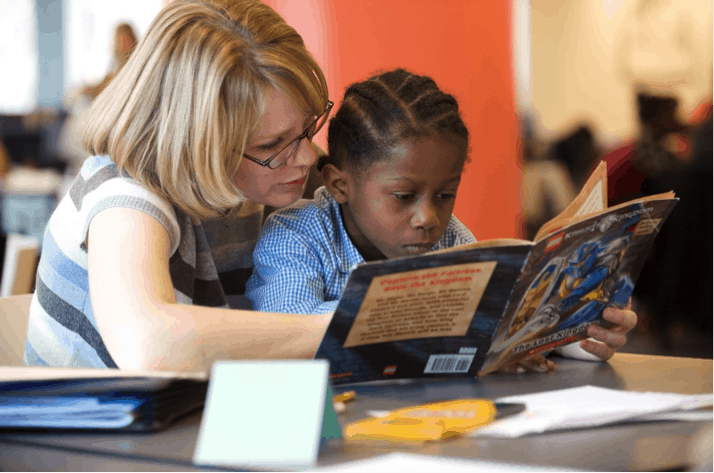
Lady reading to child

Image credit: Joshua Hoover, US Dept. of Education

While some children are born readers, who will thrust their nose into a book given any opportunity, other children are somewhat reluctant. 

In fact, we’ve all heard parents who describe their children as kids who “hate to read”.

At Book Village, we don’t believe any child hates reading – we just think that they haven’t found the right book yet. 

If this sounds like your child, don’t despair. We have a bunch of tips below on how to encourage (or trick) your little one into reading:

1. Read by example

It’s no accident that parents who love reading often pass this love on to their children. If you read regularly, instead of passing time in front of the TV or on your mobile device, your child is more likely to follow. 

2. Don’t quit bedtime-stories

Even once your child is old enough to read independently, they can still get great pleasure from being read to. 

This time is so important in terms of bonding, creating a positive feeling about reading and can be an opportunity for you to read longer novels that may be just out of your child’s reading ability. 

3. Reread old favourites

It’s perfectly natural for younger children to enjoy the same book over and over again – let them. Through repetition, they learn new words and correct grammar. 

4. Take turns while reading to your child

You read one page, they read one page. This way, your child gets to practice reading while enjoying the story. 

5. Let your child read whatever they want – no judgement

Even if the book is way below your child’s reading level! 

Reading should be a fun activity, so don’t limit them to novels or books without pictures. A comic book or a book of jokes still harbor many of the same benefits of reading as a longer, more involved book. 

6. Find a book that your child can relate to

This seems obvious, but so many children love to read stories that they can relate to, with characters who they can aspire to be like. 

This post from the Book Trust has a wonderful list of age appropriate books for different age groups of children under 14, and is a great place to start!

Above all, reading needs to be a fun and enjoyable part of your child’s every-day life. Reading shouldn’t be a chore or a punishment. Furthermore, reading for pleasure should be a no-judgement activity. 

Raising a reader starts at home. What are you reading today? 

Hector: A Boy, a Protest and the Photograph that Changed Apartheid

Photo cred: Robert Cutts

Inspired by Sam Nzima’s iconic photo of Hector Pieterson, author-illustrator Adrienne Wright has created a beautiful, graphic history book that brings the June 16th, 1976 Soweto school protests to life. This historic day is now celebrated as Youth Day in South Africa. 

The book is written as an oral history giving accounts from Hector, his older sister Antoinette and Sam, the photographer.  The powerful illustrations give a faithful account of an ordinary 12-year-old boy and his family living in Soweto, and accurately reflect their daily lives up to that terrible day.

The fire and energy of the protest is brought to life through the vivid, moving pictures – you can almost hear the beautiful Nkosi Sikelel’ iAfrika erupting from the pages.

Children from about age 9 will enjoy reading the book themselves, but this book is perfect to share with your children of any age.  Use it to start important conversations about equality today and the contributions that many brave people have made in the past.

Hector is available in hard cover from Amazon.

The author-illustrator Adrienne Wright grew up in South Africa and worked with Hector’s sister, Antoinette and the photo-journalist Sam Nzima while creating the book.  She now lives in America.

She has been an amazing help to us, going out of her way to get us a copy of Hector from a friend of hers in Jo’burg before Youth Day this year. Hector will be a great addition to the Cosmo City Primary library.

Some things that we loved while doing our research for this book included an interview with Adrienne which you can find here.

The author gives us insight into her creative process, including the writing and illustrating journey here

Finally, Adrienne’s image of George Floyd that she posted on Instagram was picked up by the New York Times in an article about artists responding to his death. This is a great achievement.

Our Favourite Stories for Primary School Children

Books in a row

Photo credThingamababy.

Who remembers jumping onto mom or dad’s lap for bedtime stories? 

That feeling of safety, comfort, love and the excitement to find out what happened to Augustus Gloop after he ate way too many sweets!

Back then, before we hit double digits, we discovered the gift that reading gave us. The gift that allowed us to experience new journeys, feel an array of emotions, and build our understanding of the world. All this, through ink and paper. 

As Stephen King said, ‘Books are a uniquely portable magic’ and through them we became time-travellers. A combination of written words and our imaginations took over, transporting us to new worlds.  

The Reading Journey

For most of us, our reading chapter started with someone reading to us. We craved our storytime and eventually, through the stages of learning to read, we began to pick up the books ourselves. 

We read storybooks full of pictures, that went onto short chapter books.

When the chapter books became too easy, we picked up novels that would keep us awake at night. Our desire to read and learn more about the world and ourselves took over – we began reading more complex stories. 

And before we knew it, we were absorbing the information in articles and journals. 

Bedtime stories became a thing of the past – but for many, a new stage in life means that we have become the reader to our own little ones, who are eagerly jumping into our laps for their stories. 

Their reading journey is beginning, much like ours did, and the enjoyment of the stories is there found in both the reader and the listener.

Book Village Recommends

Short stories by Julia Donaldson and Eric Carle were always, and are still, treasures in the bookshelf. 

From a cat soaring above the clouds in Room on the Broom to the cunning little mouse tricking a monster in The Gruffalo, Donaldson has been able to capture her audience no matter what age. 

Carle’s books too are page turners that create laughter, curiosity and inspiration. The Hungry Caterpillar and The Mixed-up Chameleon are just two examples of his captivating stories.

Longer Stories for the Not-So-Little Ones

However, if you crave longer stories with twists and turns where your evenings leap from one cliff hanger to the next, Roald Dahl will never disappoint. 

The all-time favourite Charlie and the Chocolate Factory is full of adventure and left its audience with valuable life lessons – as did most of these books. 

The BFG, MatildaJames and the Giant Peach are just a few of Dahl’s books that should be in your bookshelf, along with stories by Julia Donaldson and Eric Carle. 

If these haven’t been added to your bedtime collection already, you should be adding them before you get the chance to finish reading this sentence.

Struggling to find a library or a book shop that’s open during lock down? Visit our Facebook page and view the pinned post to find out how to access free E-books from the comfort of your own home!

Sign Up To Be Part Of Book Village!

By signing up to become a volunteer, you will be among the first to hear when the Book Village app officially launches and have the opportunity to be among the first people in the world to start making an impact through the Book Village platform.