Why Book Village offers a digital library

Apart from the Book Village App, we also provide our own digital library with thousands of children’s and young adult books for the learners and teachers to enjoy.

Reading for enjoyment has been described as a form of play.  It is a creative activity that allows us to experience other worlds, roles and feelings, in our imaginations.  The OECD in 2002 found that reading for pleasure in childhood is a better predictor of future educational success than a family’s socio-economic status.

From our experience many young South African children do not have any books at home, and so libraries are essential for them to access books to read outside of the classroom.  To encourage reading for enjoyment at any time, we have provided a digital library with thousands of children’s and young adult books.  The children love the freedom of being able to choose their own books, and a trip to the library is the highlight of the school week.   All the children at Cosmo City Primary are members of the digital library and can borrow and read books all year round if they have a device at home.  We’ve found that whilst most children do not have their own tablets, smart phones or laptops, almost all the children’s parents have a smart phone, and often let their little ones read stories on them at home.

We also want to encourage children to enjoy reading and listening to stories in their home language, and so we have added collections of the excellent Nal’ibali stories to the digital library.  We couldn’t agree more with the Nal’ibali idea that “Children who read and hear engaging stories in languages they understand are well equipped and motivated to learn to read and write.  They are also more likely to make a meaningful contribution to society.”

Frequently reading for pleasure and fun results in children achieving higher PIRLS literacy scores. (PIRLS 2006), but apart from that  – “The more that you read, the more things you will know.  The more that you learn, the more places you’ll go.”  Dr Seuss

Photo by Catherine Hammond on Unsplash
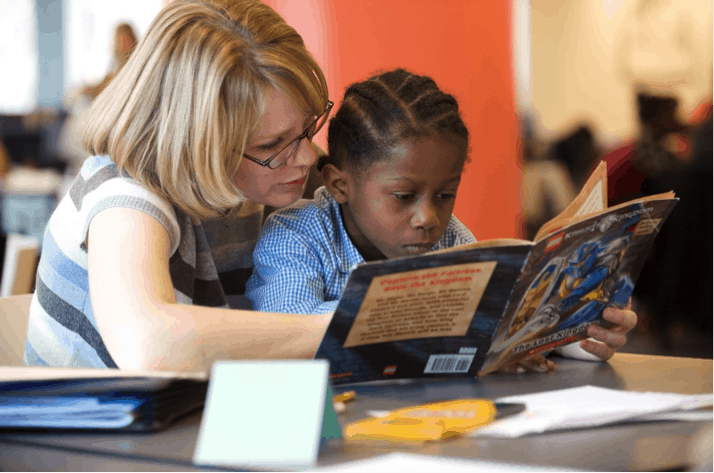
Raising a Reader: 6 Ways to Foster a Love of Reading in Children

Lady reading to child

Image credit: Joshua Hoover, US Dept. of Education

While some children are born readers, who will thrust their nose into a book given any opportunity, other children are somewhat reluctant. 

In fact, we’ve all heard parents who describe their children as kids who “hate to read”.

At Book Village, we don’t believe any child hates reading – we just think that they haven’t found the right book yet. 

If this sounds like your child, don’t despair. We have a bunch of tips below on how to encourage (or trick) your little one into reading:

1. Read by example

It’s no accident that parents who love reading often pass this love on to their children. If you read regularly, instead of passing time in front of the TV or on your mobile device, your child is more likely to follow. 

2. Don’t quit bedtime-stories

Even once your child is old enough to read independently, they can still get great pleasure from being read to. 

This time is so important in terms of bonding, creating a positive feeling about reading and can be an opportunity for you to read longer novels that may be just out of your child’s reading ability. 

3. Reread old favourites

It’s perfectly natural for younger children to enjoy the same book over and over again – let them. Through repetition, they learn new words and correct grammar. 

4. Take turns while reading to your child

You read one page, they read one page. This way, your child gets to practice reading while enjoying the story. 

5. Let your child read whatever they want – no judgement

Even if the book is way below your child’s reading level! 

Reading should be a fun activity, so don’t limit them to novels or books without pictures. A comic book or a book of jokes still harbor many of the same benefits of reading as a longer, more involved book. 

6. Find a book that your child can relate to

This seems obvious, but so many children love to read stories that they can relate to, with characters who they can aspire to be like. 

This post from the Book Trust has a wonderful list of age appropriate books for different age groups of children under 14, and is a great place to start!

Above all, reading needs to be a fun and enjoyable part of your child’s every-day life. Reading shouldn’t be a chore or a punishment. Furthermore, reading for pleasure should be a no-judgement activity. 

Raising a reader starts at home. What are you reading today? 

Sign Up To Be Part Of Book Village!

By signing up to become a volunteer, you will be among the first to hear when the Book Village app officially launches and have the opportunity to be among the first people in the world to start making an impact through the Book Village platform.