I Reread Twilight as an Adult, Loved It, and I Am Not Ashamed: A Confessional.

Twilight book on bed

Way back in 2009 I was a gangly (and angsty) fourteen-year-old. It was a simpler time, although my fourteen-year-old self would never admit this.  

A time when paperback books were more popular than kindle. 

When the idea of a world-wide pandemic would be the plot of a thriller novel. 

When school was taught in classrooms, and I didn’t have the crushing expectations of adulthood on my back. 

Vampires and Werewolves suddenly became the flavour of the month and I could not get enough.

Bella and Edward’s hardships made light of my measly fourteen-year-old problems – not enough friends, horrible at putting on eyeliner. The usual. 

My fourteen-year-old self would never forgive me if I didn’t stress the fact that I read Twilight before it was cool. Like before the movies were released. My seventeen-year-old self might die if she knew I was telling you, dear reader, that I read these books more times than I can count. And that I had a seriously unhealthy obsession with Edward Cullen. 

By the time I hit seventeen, you see, Twilight was no longer “cool” and the fact that I still had a closeted crush on Edward (and, let’s be honest, Jacob), was cringeworthy. So I shunned my old favourite, banishing Forkes and the Vampires and Werewolves to a dusty old shelf until I’d one day be ready to pick them up again. 

A few weeks back, I found myself longing for some comfort and solace in the whirlwind of the end of 2020, and who better to bring that comfort than an old friend in the form of a long-forgotten book? 

Telling anyone who would listen that I was only rereading them for “research purposes”, I picked up my well-loved copies of the books from the shelf and began reading. 

I finished the entire saga (four books, a few thousand pages) within a week, struggling to tear myself away from the books to do mundane human things like eating, sleeping and going to the loo. 

I found myself rooting for Edward and Bella in Twilight, sobbing over heartbreak in New Moon, sobbing even more in Eclipse and squealing like a teenaged girl the whole way through Breaking Dawn. Over ten years since reading the novels for the first time, and it felt just as intense as the first time. 

Reading Twilight in my mid-twenties was different. More relatable in some ways, having actually had a real boyfriend and had my heart broken. But also, a bit alarming as I realized just how poor a role model Bella Swan is for the modern woman. 

As a die-hard “Team Edward” member in my teens, I now look at Jacob with softer eyes, thinking about what would really be best for Bella. As a teen I so desperately wanted to experience a whirlwind, knock-you-off-your-feet romance like Bella. Now I see a girl who perhaps needed to spend more time with her friends and, you know, not rush into anything crazy like marriage, bearing a half-vampire, half-human child and immortality.

Reading this old favourite was a shot of nostalgia straight to the heart, and I allowed myself to be fully wrapped up in it. I let myself bawl as Edward leaves Bella, and felt my mood sour as she was plunged into the depths of depression. I stayed up until 2 am finding out if the Cullens beat the bad guys. I emerged from my reading binge foggy eyed, with a sore neck from days spent crouched over the books. 

I regret nothing. 

Except ever thinking that I was “too cool” for a book, or that rereading was cheating. So if you happen to be reading this, I implore you: go reread your Twilight, or that awful Nicholas Sparks novel which you secretly loved. Or your high school English set work that made you feel something for the first time. Do it, and do it proudly.

The joy of re-reading and reconnecting with an old story should not be something you reserve for Netflix.  

– Ali

Photo by Mel Poole on Unsplash

Creating a Reading Habit in 2021

Reading on a tablet

If there’s one resolution we could all be taking to heart this January, it’s developing better reading habits. 

Whether it’s to read more books, start with reading a book, or to read something different, the benefits of reading both for yourself and your child are endless.

But where does one even begin with creating a better habit?

As usual, we’ve got you covered with some nifty ideas to reach your reading goals this year. 

  1. Head to the (digital) library 

First things first, you’ll need access to books. Luckily there are a myriad of books available on the Gauteng digital library

Simply sign up for a library card using your ID number, and access books via Overdrive using any smartphone, tablet or laptop. 

  • Read what you enjoy

This one seems a little bit obvious, but many people feel the pressure to read something intellectual that will look good on their Goodreads list. 

Don’t do it. 

Reading is supposed to be enjoyable, so if you get 50 pages in and decide that “The 5 am club” is not for you, then that’s absolutely fine!

  • Re-read an old favourite

When was the last time you read the Harry Potter series? Or another book that just spoke to you on another level? There’s something wonderful about reading a book you know – almost like visiting an old friend. Allow yourself to bask in the nostalgia and unapologetically enjoy an old favourite – it still counts as part of your reading list.

  • Set aside time

If you find yourself never having the time to read, then it’s time to prioritise. Set aside 30 minutes per day – I like reading right before I go to bed – that you dedicate strictly to reading. 

  • Join a book club

Meet up with (or Video call) other people who enjoy reading too. By creating a space where you can discuss what you’ve read and get recommendations, you’ll be more motivated to read and share. Besides – what better pandemic activity is there than to have a socially distanced book club?

  • Get some good recommendations

Sometimes, not reading stems from just not knowing what to read in the first place. Luckily, there are so many ways to get great recommendations including: Libby, the app powered by Overdrive that seems to know just what they have in their library that you’d love to read next. 

Another great website to get good book recommendations is Goodreads – you log books that you’ve already read and it recommends books for you in genres that you’re interested in. 

Finally, I like to use What Should I Read Next  – a website that recommends similar books based on what kind of book or author you type into their search engine. 

Happy reading everyone!

Photo by James Tarbotton on Unsplash

Does Your Little One have these 7 Pre-Reading Skills?

Kids playing with letters

The first time a child picks up a book, they’re unlikely to be a fluent reader, let alone know how to open it properly. 

This is because like with any skill, you must start with baby steps before you can start walking. Or in this case, reading fluidly. 

Through the course of their reading development, a child will go through 4 reading stages:

  • Emergent reader (cannot read yet) 
  • Beginner reader 
  • Early reader
  • Fluent reader

Throughout these stages there are skills that children develop in order to become fluent readers. 

Before any child starts to read, they need to first master these 7 pre-reading skills:

1. Interest and motivation to read 

In order to learn how to read, children must have a desire to read. They must be motivated in order to develop new skills, which will help them grow as a reader.  

A way to inspire interest and motivation in your children is to read to them everyday and allow them to choose the books.

2. Visual perception

This is our brains’ ability to process what we see what our eyes have picked up. 

When children learn to read, their visual perception needs to be accurate so that they can distinguish between foreground and background, and discriminate between colours, shapes, sizes and position in space. This helps children to visualise and process words in the long-term. 

If your little one is having visual perception difficulties there are many activities that will help improve these skills.

3. Book and print awareness

Before learning to read, children will pick up books and enjoy the pictures without realising that the letters on the page can be deciphered to create meaning.  

Children need to develop an understanding of how letters create words and these words can be put into sentences to create meaning. 

Playing word games, pointing out words around children in their environment, modelling the correct way to handle books and using your finger to follow the text as you read a book to them are ways to improve their book and print awareness. 

4. Narrative and listening skills

When listening to a story, a child is able to focus on what the story is about, use their imagination and develop expectations of how the story will end. 

Through this process, they are able to develop their comprehension skills, vocabulary and memory. Good narrative skills allow a child to describe things and retell events. Both narrative and listening skills are essential for a child to learn how to read as they assist in improving vocabulary, predicting, understanding, concentration and memory.

5. Letter Knowledge

In order for children to read words, they need to understand that letters have names and sounds, and can be uppercase and lowercase. 

Ways to help improve your child’s letter knowledge are to read alphabet books,  teach them the letters in their name and make them aware of letters in their environment by looking at license plates on cars, recipe books, labels on groceries and other items. 

6. Phonological and phonemic awareness

This is the ability to hear that words are made up of smaller sounds and these sounds can be manipulated. When a child hears a word like ‘pat’, they should be able to identify the different letters and their sounds – /p/ /a/ /t/. They should also be able to hear sound patterns such as rhyme and syllables. 

Singing nursery rhymes, breaking down words into sounds, counting syllables, and changing the beginning sounds of words are some of the many activities that can help improve phonological and phonemic awareness. 

7. Vocabulary

Lastly, knowing the names of things is an essential skill in order to learn how to read. The greater your child’s vocabulary the easier it will be for them to learn how to read and enjoy reading. 

When reading stories to your children they can hear the words and connect them with pictures in the storybook. This is a great way to improve their vocabulary. 

Other ways you can improve vocabulary include having conversations with your children and explaining unfamiliar words to them, asking them to describe things such as their toys or food, reading stories everyday and playing word games . 

Photo by Marisa Howenstine on Unsplash

Travelling in the time of COVID: Our picks for December’s reading list

School holidays usually make us think about travel and adventure, but as we reach the end of this COVID year , the only sort of travel and adventure most of us will experience is to be found in books. And the great thing about the Book Village Digital library is that it never closes.

We have chosen 10 books from our library that will take you, wherever you are, to worlds of adventure, mystery and survival.

1. Jock of the Bushveld

A classic South African adventure, travel story of the smallest, bravest and best pup of the litter is Jock of the Bushveld (based on the film and written by Lesley Beake).  Set in the 1870’s when hopeful gold diggers are streaming into South Africa and opportunities, dangers and crooks lie around every corner.

2. Magic Tree House Collection

Readers from ages 6-10 can adventure through history with Jack and Annie with the help of spellbinding books and a tree house filled with mysterious powers.

3. Dogtective William Series

Children will love reading the thrilling adventures of 12 year old  South African, Adrian and his four-legged detective hero, rescue dog William, described as a cross between Hercule Poirot and Paddington Bear.  Read their adventures as they investigate rhino poaching in the Bushveld, diamond theft in Namibia and the theft of a celebrity pet in New York.

 4. Mission Survival Series by Bear Grylls.

Meet Beck Granger, fearless traveller and youngest survival expert, and follow his explosive adventures. From the Colombian jungle to the frozen wilderness  of Alaska to the Sahara desert, Beck Granger has the skills to make it out alive.

5. The True Confessions of Charlotte Doyle

Audiobook

The heroine in this breathtaking tale of murder and mutiny on the high seas is 13 year old Charlotte Doyle who finds herself the lone passenger on the long voyage from England to Rhode Island in 1832.  

6. Wild Robot Series

Audiobook

What happens when technology and nature collide? When robot Roz opens her eyes for the first time, she discovers that she is alone on a remote, wild island.  Can she survive in the wilderness?

7. I Will Always Write Back

Audiobook

The compelling, true story of the correspondence between a Zimbabwean boy and an all-American girl that started as a class assignment and developed into a friendship that changed both their lives.

8. Alone on a Wide Wide Sea by Michael Morpurgo

Audiobook

“I was there on the quayside to see Allie take her out for the first time, saw her dancing through the waves, and I knew I’d never built a finer boat.”

Inspired by the history of English orphans transported to Australia after World War 2, it is an adventurous, life affirming novel in two parts.

9. Diary of a Wimpy Kid

This is easily the most popular series in the library.

 Join Greg and his family on their surprise road trip in The Long Haul, or in The Getaway, when the family go on a tropical holiday, where everything that can go wrong does. 

10. The Adventures of Tin Tin 

Whilst we don’t have Tintin in our library yet, we just couldn’t leave him out.  Tintin is surely the most intrepid travelling book character of all time. Tintin and Snowy visited dozens of countries, real and fictional, in all five continents and even went into space during their 23 adventures. 

Photo by PerfPhoto by Perfecto Capucine on Unsplash

6 Benefits to Online Educational Games

Boy on iPad

Technological ‘distractions’ throughout the years have made it increasingly difficult to encourage children to read. TV, computer games, tablets, phones, Xbox and many others are seen by children as a more exciting past time than picking up a book. However, there can be benefits to using this technology as an educational tool. Here are 6 reasons why we believe online reading games will benefit children: 

1.    Motivating

Online games provide children with a fun and exciting experience. With such a variety of reading games, every child’s needs and interests are catered for. With their interactive element, online reading games can keep your child entertained for hours, while they are learning essential skills.

2.    Designed by literacy experts

Most online reading games have been carefully designed by experienced educators and literacy experts to include the stages of reading development, as well as the skills and strategies needed to improve fluency. However, we would recommend you supervise your child’s choice of games before they begin.

3.    Learning skills and strategies

Many games teach a variety of skills and strategies that contribute to the 5 components of reading. These components are phonics, phonemic awareness, vocabulary, fluency and comprehension. With the motivation of having fun while they play, your children will be developing and improving these skills. 

4.    Rewards systems

With so many different and fun reward systems, online reading games keep children captivated for hours. Meaning that while they are having fun and enjoying their game, they are improving their reading abilities and developing new skills. 

5.    Technological fluency

Learning how to use and navigate applications and the internet is an essential tool for any individual in this day and age. We are living in a society dominated by technology and so it is important to understand how to use it. Therefore, these online educational games improve reading skills, as well as a child’s ability to use technology. 

6.    Improving memory capacity

Most games require memorization and so while playing online reading games children are improving their memory capacity.  This includes memorizing vocabulary, steps to solving games, sequences and many others. Memorization is a foundational skill.

Limiting screen time doesn’t have to be a painful, ‘police-parenting’ experience anymore. As Mary Poppins says ‘In every job that must be done there is an element of fun. You find the fun and – SNAP – the job’s a game!’.

Photo by stem.T4L on Unsplash

9 Springtime Stories

Flowers on book

In South Africa, September brings Spring celebrations and perhaps flowers in the classroom for some lucky teachers. At Book Village, we had a look at books in our library inspired by nature, and some of the books that will take you into the exciting, secret and terrifying gardens essential for every childhood.

Fiction Books

1.The Tale of Peter Rabbit, set in the wonderful and frightening vegetable garden of Mr. McGregor is probably one of the first books many children will remember being read to them.  Peter is told by his mother not to go into Mr. McGregor’s garden, but of course he did and – you know the rest!

2. The children in The Secret Garden, by Frances Hodgson Burnett work together to plant their own garden of happiness. The magic of the growth and new life in the secret garden will make every child want to go out and experience the wonder of growing something for themselves.

3.  Alice is desperate to get into the “loveliest garden you ever saw”.  “How she longed to get out of that dark hall, and wander about among those beds of bright flowers and those cool fountains” as she peers out through the tiny door. From Alice’s Adventures in Wonderland by Lewis Carroll.

4.  In The Tree Doctor, Dr Seuss’ Cat in the Hat and Dr Twiggles help Sally and Nick discover why their tree won’t grow.  This is written for children learning to read and is perfect for Spring reading and Arbour Day celebrations.

5.  We love Richard Scarryand Lowly Worm Meets the Early Bird is another book for beginner readers to enjoy.  Early Bird looks and looks for a worm to play with.  He is about to give up searching when he meets Lowly Worm. 

6.  The Garden Thief by Gertrude Chandler Warner is a book in the Boxcar Children Series, perfect for children in grades 2-6 to read by themselves. Something strange is happening in the community garden!  Who is stealing all the veggies?

We have many interesting non-fiction books that we hope might inspire children to think about nature.  Here are three that we think our children will really enjoy.

Non-fiction Books

7.  Counting Birds by Heidi Stemple is the award-winning story behind the first annual bird count in America.  It is a beautifully illustrated book that introduces children to the idea of bird counts and hopefully will inspire them to get involved in conservation at home.

8.  Eavesdropping on Elephants.  Patricia Newman takes readers behind the scenes at the Cornell University’s Elephant Listening Project to see how scientists are making new discoveries about elephant communication and how they are using what they learn to help with elephant conservation.

9.  South African children might have their own experiences of vervet monkeys and will surely enjoy Nicko, the Tale of a Vervet Monkey on an African Farm by Penny Haw.  This is the true story of Alice Kirk and the adventures of Nicko, the baby vervet monkey that was found abandoned on her home farm in the Kwa-Zulu Natal midlands.

There really is a story for every season, and most of the books mentioned are available from the Gauteng Provincial Online Library

The Quirks of a Digital Library

Books in digital format

Photo cred: Pen Waggener 

We at Book Village have been loving the Gauteng Provincial Online Library during lockdown, but it really does have some odd quirks!

Unlike in a traditional library, digital books cannot be stolen, lost or overdue, but it seems that they can disappear from the library when the licence expires, which can be confusing!  So you might be able to put a hold on the third book in the wonderful Cicero Trilogy – Dictator because the library once owned it, but you might never receive it unless the librarian decides to repurchase the licence.  The other two books of the trilogy don’t seem to have ever been owned by the library, but you can make a recommendation for the library to buy them through the OverDrive website. So we’ve been busy recommending the purchase of obvious missing library books to the Gauteng Online Library.

Over the past few years we have worked in school libraries stocked entirely with donated books, and the best of these libraries all have some common features:  entire shelves of Enid Blyton books, several copies of each Roald Dahl book, the middle book of, say, His Dark Materials Trilogy and, in the best libraries, extremely tatty and loved copies of some of the Horrid Henry books, Diary of a Wimpy Kid and if the kids are really lucky, the odd Harry Potter book and some new teen fiction. The non-fiction is usually a dismal collection of 1950s biology textbooks and random books about writing batch files for MS-DOS or the Natural History of Guam.

Book Village Digital Library

The Book Village digital library was bought from OverDrive as a curated collection of children’s books and generally only shares the best aspects of a traditional library.  When having noticed a few quirks and gaps in the digital library, we asked them how they put the collection together. 

They replied stating that they consulted with librarians in South African Schools and focused on popular South African authors and titles, as well as titles popular in schools internationally.  They maintain the library by adding more copies of in-demand titles, as well as new releases and requests.  

The Book Village library is indeed a wonderful collection of books and we think there will be books for every child to love.  But we are quite sure that the kids would happily swop Anna Karenina for the 13 Storey Treehouse and The Lives of the Necromancers for anything by Philip Pullman.  

We are always looking for new book recommendations and so if you have any ideas please email them to sarah@bookvillage.co.za.

Read Like a Girl – Strong Female Characters That We Love

The future is female

It’s August, and that means Women’s month in South Africa. This is a day when we remember 9th August 1956 when 20 000 women, led by Lilian Ngoyi, Helen Joseph, Albertina Sisulu and Sophia Williams-De Bruyn, marched to the Union Buildings in Pretoria to protest the pass laws.

Women’s month is a time where we look at who we are, what we believe in and how to pursue our goals. 

Many girls might not have role models around that they can relate to, but fiction provides a large variety of strong female characters.  By reading these books, they might find one to identify with to give them energy and wisdom to make the choices needed to succeed.

We had a look at the books that can be borrowed from the Book Village library, and came up with these ideas:

Strong Female Characters in Books

Roald Dahl has two great girl characters. Matilda is misunderstood by her awful family, but is a brave book lover who taught herself everything from library books and uses her magical powers to overcome the evil Miss Trunchbull. 

Sophie from The BFG is an orphan, resilient and brave and heroically helps the BFG to stop the, man-eating giants.

Our library has many audiobooks of the Nancy Drew series. Nancy drew is the original super- girl sleuth, and as a cultural icon is cited as a formative influence by Hillary Clinton and the US supreme court justices, Sandra Day O’Connor and Sonia Sotomayor.

Many girls will relate to Hermione Granger from the Harry Potter series. At first teased for being an outspoken know- it- all, she became the heroine of Hogwarts with her intelligence, hard work and ability to always do the right thing, even when that made her unpopular.

We could not put down The Hunger Games trilogy when we read it, and the main character, Katniss Everdeen will appeal to many older girls.  A brave and daring hunter and survivor, she is a symbol of rebellion against the oppressive Capitol.  Book Village has both audiobook and e-book copies that may be borrowed by our students.

There are of course, also young, living, strong, female role models around today who have inspirational books:

Books Written by Strong, Female Role Models

Greta Thunberg , the 17 year old Swedish climate change activist, has a book of her speeches, No One Is Too Small to Make a Difference.

Malala Yousafzai’s I am Malala has been recognized by the world as an inspired activist for girls’ education.

By encouraging our girls to read, they might just see the possibilities in their lives.

Most of these books may be borrowed online from the Gauteng Provincial Library – and will appeal to girls, boys and adults alike as we admire and celebrate women from all walks of life this women’s month. 

Raising a Reader: 6 Ways to Foster a Love of Reading in Children

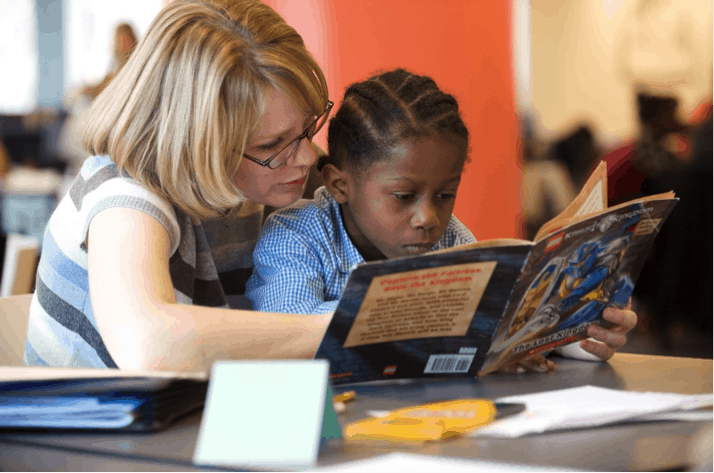
Lady reading to child

Image credit: Joshua Hoover, US Dept. of Education

While some children are born readers, who will thrust their nose into a book given any opportunity, other children are somewhat reluctant. 

In fact, we’ve all heard parents who describe their children as kids who “hate to read”.

At Book Village, we don’t believe any child hates reading – we just think that they haven’t found the right book yet. 

If this sounds like your child, don’t despair. We have a bunch of tips below on how to encourage (or trick) your little one into reading:

1. Read by example

It’s no accident that parents who love reading often pass this love on to their children. If you read regularly, instead of passing time in front of the TV or on your mobile device, your child is more likely to follow. 

2. Don’t quit bedtime-stories

Even once your child is old enough to read independently, they can still get great pleasure from being read to. 

This time is so important in terms of bonding, creating a positive feeling about reading and can be an opportunity for you to read longer novels that may be just out of your child’s reading ability. 

3. Reread old favourites

It’s perfectly natural for younger children to enjoy the same book over and over again – let them. Through repetition, they learn new words and correct grammar. 

4. Take turns while reading to your child

You read one page, they read one page. This way, your child gets to practice reading while enjoying the story. 

5. Let your child read whatever they want – no judgement

Even if the book is way below your child’s reading level! 

Reading should be a fun activity, so don’t limit them to novels or books without pictures. A comic book or a book of jokes still harbor many of the same benefits of reading as a longer, more involved book. 

6. Find a book that your child can relate to

This seems obvious, but so many children love to read stories that they can relate to, with characters who they can aspire to be like. 

This post from the Book Trust has a wonderful list of age appropriate books for different age groups of children under 14, and is a great place to start!

Above all, reading needs to be a fun and enjoyable part of your child’s every-day life. Reading shouldn’t be a chore or a punishment. Furthermore, reading for pleasure should be a no-judgement activity. 

Raising a reader starts at home. What are you reading today? 

Hector: A Boy, a Protest and the Photograph that Changed Apartheid

Photo cred: Robert Cutts

Inspired by Sam Nzima’s iconic photo of Hector Pieterson, author-illustrator Adrienne Wright has created a beautiful, graphic history book that brings the June 16th, 1976 Soweto school protests to life. This historic day is now celebrated as Youth Day in South Africa. 

The book is written as an oral history giving accounts from Hector, his older sister Antoinette and Sam, the photographer.  The powerful illustrations give a faithful account of an ordinary 12-year-old boy and his family living in Soweto, and accurately reflect their daily lives up to that terrible day.

The fire and energy of the protest is brought to life through the vivid, moving pictures – you can almost hear the beautiful Nkosi Sikelel’ iAfrika erupting from the pages.

Children from about age 9 will enjoy reading the book themselves, but this book is perfect to share with your children of any age.  Use it to start important conversations about equality today and the contributions that many brave people have made in the past.

Hector is available in hard cover from Amazon.

The author-illustrator Adrienne Wright grew up in South Africa and worked with Hector’s sister, Antoinette and the photo-journalist Sam Nzima while creating the book.  She now lives in America.

She has been an amazing help to us, going out of her way to get us a copy of Hector from a friend of hers in Jo’burg before Youth Day this year. Hector will be a great addition to the Cosmo City Primary library.

Some things that we loved while doing our research for this book included an interview with Adrienne which you can find here.

The author gives us insight into her creative process, including the writing and illustrating journey here

Finally, Adrienne’s image of George Floyd that she posted on Instagram was picked up by the New York Times in an article about artists responding to his death. This is a great achievement.

Sign Up To Be Part Of Book Village!

By signing up to become a volunteer, you will be among the first to hear when the Book Village app officially launches and have the opportunity to be among the first people in the world to start making an impact through the Book Village platform.